Noise at the Felt: How Table Talk Erodes Baccarat Discipline and What the Sharpest Players Do Instead
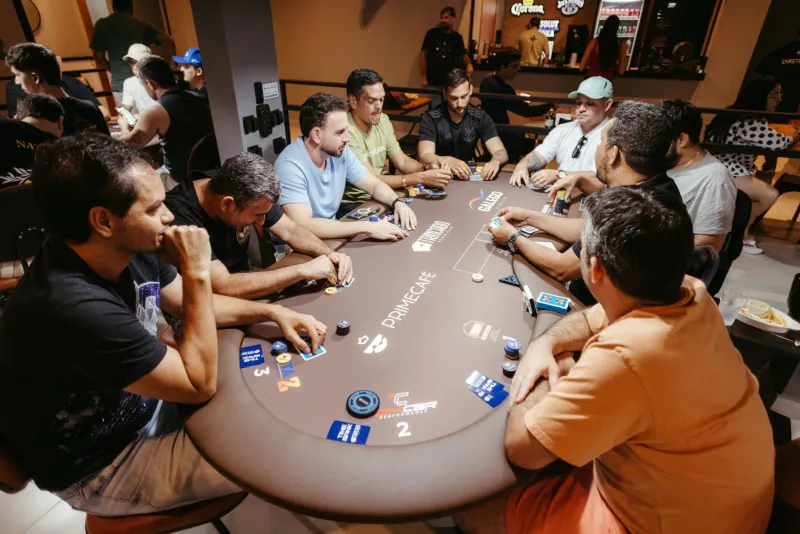
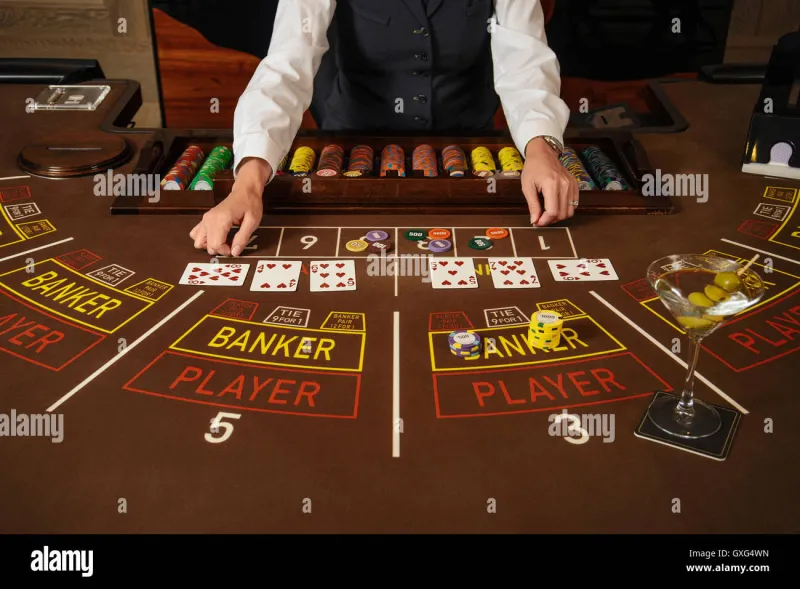
Walk into any baccarat pit in Las Vegas, Atlantic City, or a tribal casino in the Midwest on a busy Friday night, and you will encounter a predictable social ecosystem. Someone is celebrating a streak. Someone else is mourning one. A third player is offering unsolicited analysis about why the Banker is "due" for a correction. The energy is contagious, the commentary is constant, and the pressure to participate — both conversationally and financially — is more powerful than most players ever stop to acknowledge.
Experienced baccarat players understand something that newer participants often learn the hard way: the social environment at the table is not neutral. It is an active force, and if you are not deliberately managing your relationship with it, it is managing you.
Why Baccarat Tables Breed Vocal Players
Baccarat is, by design, a game with very little for a player to do. Unlike poker, where strategy unfolds through active decision trees, baccarat reduces your choices to three options per hand. That structural simplicity creates a vacuum, and human beings fill vacuums with conversation.
The talk that fills that vacuum tends to cluster around a few familiar themes: pattern recognition, streak analysis, gut feelings dressed up as insight, and the kind of collective enthusiasm that builds when a table runs hot. None of this is inherently harmful at the level of casual entertainment. The problem arises when that chatter begins to influence your betting decisions in ways that conflict with your pre-established strategy.
This is not a theoretical concern. Behavioral research on group dynamics consistently demonstrates that individuals modify their choices when they perceive social consensus around them, even when that consensus is factually unsupported. At a baccarat table, this effect is amplified by the speed of the game, the presence of real money, and the emotional volatility that accompanies winning and losing streaks.
The Difference Between Observation and Capitulation
There is a meaningful distinction between listening to other players and being steered by them. Observing that three players at your table are all wagering on Banker is a data point about table sentiment, nothing more. It carries no mathematical weight regarding the outcome of the next hand. Acting on that observation — shifting your own bet because you feel social pressure to align with the group — is something else entirely.
Capitulation at the baccarat table rarely announces itself clearly. It disguises itself as open-mindedness. It sounds like "maybe they're onto something" or "I don't want to be the only one betting Player when everyone else is on Banker." These rationalizations feel reasonable in the moment. They are not strategic reasoning. They are social conformity wearing strategic clothing.
The quietest, most methodical players at high-stakes baccarat games have typically learned to recognize this distinction through experience. They may hear everything being said around them. They simply do not allow it to function as input into their betting framework.
Emotional Contagion and the Hot Table Problem
Perhaps the most insidious form of table influence is not peer pressure but emotional contagion — the involuntary absorption of the emotional states of those around you. When a table runs hot and multiple players are winning, the collective mood elevates. Laughter increases. Bet sizes creep upward. The atmosphere communicates that risk is acceptable, even rewarding.
This is precisely the moment when disciplined players face their greatest test. A hot table does not change the house edge on any individual hand. The Banker bet still carries its standard 1.06% house advantage. The commission structure does not waive itself because the room is jubilant. Yet the emotional environment actively encourages players to abandon the unit-sizing discipline they arrived with, to chase the feeling of the moment rather than adhere to a plan built on cooler logic.
The reverse is equally dangerous. A cold table — where losses are mounting and frustration is visible — generates its own contagion. Players grow terse, impulsive, and prone to the kind of escalating bets that attempt to recover losses in a single hand. If you are absorbing that energy without filtering it, your own decision-making will reflect it.
Protecting Your Mental Game in a Social Environment
Building resistance to table social pressure is a genuine skill, and like most skills, it develops through deliberate practice. Several approaches are worth incorporating into your pre-session preparation.
Establish your session parameters before you sit down. Your maximum loss threshold, your unit size, and your exit conditions should be fixed before you place your first chip. Written commitments — even a brief note on your phone — are more durable under social pressure than mental ones.
Treat other players' commentary as ambient noise. This does not require rudeness. You can be collegial and pleasant without allowing conversation to function as strategic input. Acknowledge what is said, engage socially if you wish, and then return your attention to your own framework.
Monitor your bet sizing as a diagnostic tool. If your unit sizes are drifting upward during a run of table enthusiasm, that drift is evidence that external influence is affecting your decisions. Catching it early, before significant variance accumulates, is far easier than correcting it after the damage is done.
Use natural breaks to reset. Shoe shuffles and brief pauses in play are opportunities to step back mentally, review your session position honestly, and recommit to your original parameters. Players who use these moments for reflection are less likely to find themselves far outside their planned session structure.
What Silence Actually Signals
In American casino culture, the quiet player at a baccarat table is sometimes misread as aloof, unsophisticated, or simply antisocial. The reality, more often, is the opposite. Experienced players who have spent meaningful time at the felt have generally learned that the energy spent on commentary is energy not spent on self-monitoring — and self-monitoring is the only variable in baccarat that a player can actually control.
The game will produce its outcomes regardless of what anyone says about them. The house edge will remain what it is. Streaks will begin and end on their own schedule, indifferent to the enthusiasm or despair of the players watching them unfold. What you can govern, with discipline and preparation, is how you respond to all of it.
The sharpest players at the table are not necessarily the loudest. They are the ones whose bet sizes look roughly the same in the fifth shoe as they did in the first — steady, intentional, and unmoved by the emotional weather of the room around them.
That kind of composure is not a personality type. It is a practiced skill. And at Baccarat 168 Academy, we believe it deserves exactly as much attention as any betting system or hand-reading strategy you will ever study.