What the Table Is Actually Telling You: Separating Legitimate Observation from Baccarat Superstition
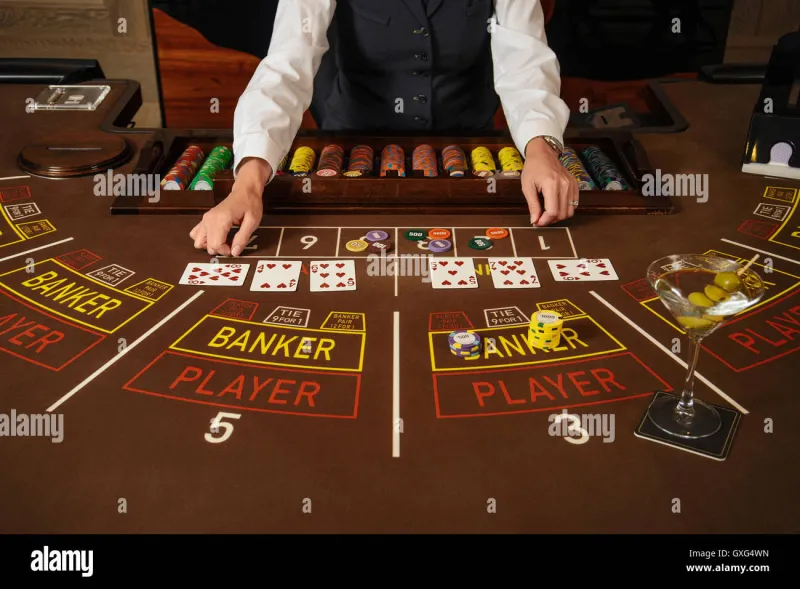
Photo: baccarat dealer handling cards at casino table close up, via c8.alamy.com
Most experienced baccarat players have heard the cautionary advice: the scoreboard means nothing, past hands do not predict future outcomes, and the shoe has no memory. That guidance is mathematically sound and worth internalizing. However, dismissing all observation as superstition goes one step too far. There are legitimate, procedural, and behavioral signals at a live baccarat table that attentive players can use—not to predict card outcomes, but to make smarter decisions about when and how they engage with the game.
The distinction matters. Chasing a "Banker streak" because six Banker hands appeared in a row is superstition. Noticing that a particular table runs unusually fast, creating conditions that inflate hourly losses, is actionable intelligence. This article focuses on the latter.
The Difference Between Pattern Recognition and Magical Thinking
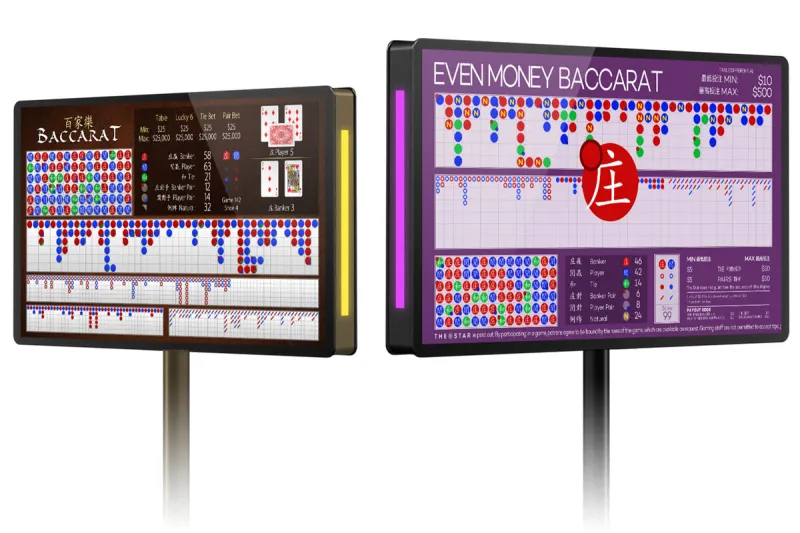
Human brains are extraordinarily good at finding patterns—sometimes too good. In baccarat, this tendency manifests as players reading meaning into roadmaps (the bead plate, big road, big eye boy) that, while culturally significant in the game's Macau and Asian heritage, carry no predictive mathematical value in a properly shuffled shoe.
Legitimate observation operates differently. It focuses on elements outside the cards themselves: game pace, dealer mechanics, table conditions, and structural rule variations. These factors do not predict which hand wins, but they do affect your expected loss rate, your comfort level, and the quality of decisions you make under pressure.
A useful mental test: ask yourself whether the signal you're observing relates to the cards or to the conditions surrounding the game. If it's the cards, treat it as noise. If it's the conditions, pay attention.
Dealer Pace and Your Hourly Exposure
One of the most underappreciated variables in live baccarat is table speed. The house edge in baccarat is fixed—approximately 1.06% on Banker and 1.24% on Player. But your actual dollar loss over a session depends not only on that edge but also on how many hands per hour you play.
A brisk dealer running 80 hands per hour exposes you to roughly 60% more decisions than a slower table averaging 50 hands per hour. At a $25 minimum table, that difference translates to a meaningfully higher expected loss over a two-hour session, even though the house edge itself never changed.
Observant players scout table pace before sitting down. Watch a table for five to ten minutes before buying in. Count hands. A dealer who moves efficiently but without rushing, who allows natural breaks between shoes, and whose table has moderate occupancy typically offers a more manageable pace than a short-handed table where an aggressive dealer sets a machine-gun rhythm.
This is not superstition. It is applied mathematics.
Reading the Shoe Change and Shuffle Procedures
In American casinos, baccarat is typically dealt from an eight-deck shoe. The depth at which the cut card is placed—usually somewhere between 14 and 26 cards from the end—determines how many hands are dealt before a reshuffle. This is a procedural detail, not a mystical one, but it carries practical implications.
As the shoe runs deeper, card composition deviates more significantly from a balanced distribution, which is why some advantage players monitor shoe depth in games like blackjack. In baccarat, the effect is far smaller due to the game's structure, but there is a documented, marginal shift in Banker versus Player win probabilities as the shoe depletes—a phenomenon studied in academic literature on baccarat composition-dependent strategies.
For the recreational player, the takeaway is modest but real: be cautious about placing large bets on a shoe's final hands when you have little information about remaining card composition, and pay attention to how your casino handles shuffle frequency. Continuous shuffle machines, increasingly common at lower-limit tables in US casinos, eliminate any shoe-depth consideration entirely and generally increase pace—two reasons to prefer hand-shuffled shoes when available.
Behavioral Signals Worth Monitoring
Dealers are professionals, and the vast majority operate with complete integrity. That said, human behavior at the table does carry observable information—not about card outcomes, but about the game environment.
Consider the following legitimate behavioral observations:
Dealer fatigue and error rates. A dealer working the final stretch of a long shift may be more prone to procedural errors—mispayments, miscounted commissions, or misread hand totals. Staying alert to these errors protects your bankroll. Casinos do correct mistakes, but only if you catch them.
Table atmosphere and player behavior. A table populated by emotionally reactive players who pressure others to bet a certain way, or who create a high-pressure social environment, can compromise your decision-making. Baccarat strategy is simple, but psychological pressure is real. Choosing a calmer table environment is a legitimate strategic consideration.
Floor supervisor engagement. When a floor supervisor is paying unusually close attention to a table, it sometimes signals that the table has experienced recent anomalous results—either a significant player win or a dispute. This is not a betting signal, but it is useful contextual awareness.
What Looks Like a Tell But Absolutely Is Not
For balance, it is worth naming the observational traps that ensnare even experienced players.
Dealer "hot streaks." Some players believe that certain dealers produce more Banker wins or more Player wins. This is pure confirmation bias. No credible statistical study has demonstrated that individual dealers influence baccarat outcomes through their dealing style.
Shoe "momentum." The idea that a shoe running heavily Banker will "correct" toward Player—or continue its trend—has no mathematical foundation. Each hand's outcome is independent of the prior hand's result within any reasonable approximation.
Roadmap formations. The visual patterns on baccarat scoreboards are culturally meaningful and can be entertaining to follow. They are not predictive. Casinos display them because they encourage longer play, not because they reveal anything about upcoming outcomes.
Building a Personal Observation Checklist
The most practical application of legitimate table observation is developing a consistent pre-session checklist. Before placing a single chip, consider reviewing the following:
- Table minimum and commission structure — Is this a no-commission table? Are Banker payouts 1:1 or 0.95:1?
- Estimated hands per hour — Is the pace manageable for your bankroll and session goals?
- Shoe type — Hand-shuffled eight-deck shoe, or continuous shuffle machine?
- Table atmosphere — Is the environment conducive to calm, deliberate decision-making?
- Your own mental state — Are you alert, unhurried, and playing within your planned budget?
None of these factors change the house edge. All of them influence the quality of your session experience and the sustainability of your bankroll.
The Disciplined Observer's Advantage
Baccarat is a game of narrow margins. The house edge is small, and no observation skill will reverse it. What disciplined observation can do is prevent you from compounding that edge through poor session management, rushed decisions, and environments that work against your concentration.
The player who scouts tables carefully, monitors game pace, watches for procedural anomalies, and maintains psychological composure will not win more hands than chance dictates. But that player will lose more slowly, make fewer errors, and leave the table having extracted the maximum value from every session. At Baccarat 168 Academy, that is precisely the standard we hold ourselves to.