Stakes, Strategy, and the Room You're Playing In: How Buy-In Size Rewrites the Baccarat Rulebook

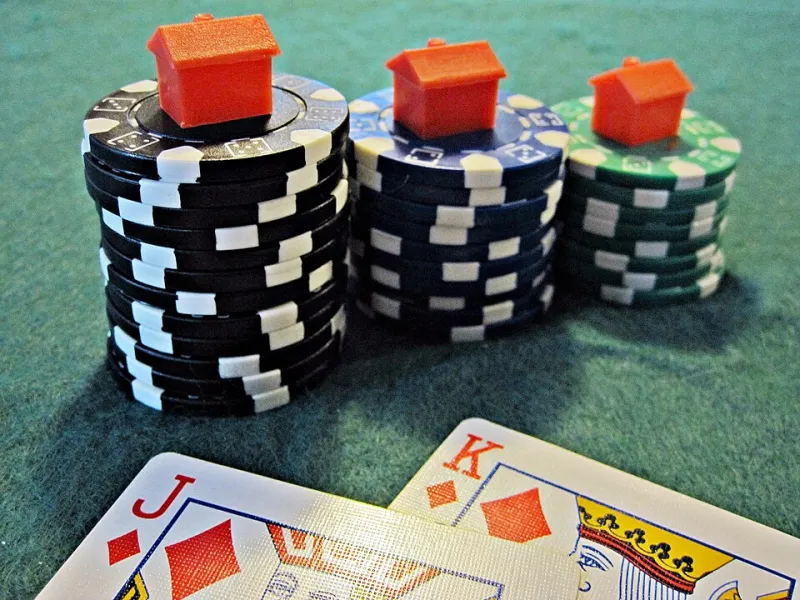
Photo: high limit baccarat casino room luxury chips and cards, via img.freepik.com
There is a persistent myth in casino gaming that baccarat strategy is universal—that the same approach that works at a $10 minimum table on the main floor of a Las Vegas Strip property applies equally in a roped-off high-limit salon where the minimum bet is $500. In reality, stake level is one of the most significant variables in baccarat strategy, and conflating the two environments leads players to apply advice that simply does not fit their situation.
This article examines how your buy-in amount changes the game at every level: the rules you encounter, the commission structures you pay, the psychological pressures you face, and the bankroll management principles that actually apply to your budget.
The Low-Stakes Table: More Exposure, Fewer Perks
For the majority of American casino visitors, baccarat begins at the low-stakes table—typically $5 to $25 minimums, found on the main casino floor at properties across the country, from Atlantic City to the Gulf Coast to downtown Las Vegas.
These tables offer accessibility, but they come with trade-offs that players often underestimate.
Game pace is higher. Low-limit tables frequently use continuous shuffle machines or see more hands per hour due to fewer players and faster dealer rotations. As discussed in broader strategy literature, a higher hand rate directly increases your expected hourly loss, even though the house edge percentage remains constant. A player betting $10 per hand at 90 hands per hour is exposed to $900 in total wagers per hour—meaning even a 1.06% Banker edge costs roughly $9.54 per hour in expected losses. That figure compounds quickly across a multi-hour session.
No-commission baccarat is more prevalent at low stakes. Many US casinos have introduced no-commission baccarat at their lower-limit tables. While the name sounds player-friendly, these games typically pay even money on all Banker wins except when Banker wins with a total of six, which pays only 50 cents on the dollar. This adjustment raises the effective house edge on the Banker bet to approximately 1.46%—meaningfully higher than the standard 1.06%. Low-stakes players who assume no-commission tables are a better deal are often paying a higher price without realizing it.
Minimum bet sizing limits loss mitigation. At a $5 table, a player cannot easily make sub-minimum bets to reduce exposure during a cold run. The floor is the floor. This rigidity means that standard flat-betting discipline—always betting the same unit—is both the simplest and most effective approach for low-stakes players.
Mid-Range Tables: The Sweet Spot for Strategic Play
Tables with minimums in the $25 to $100 range represent what many experienced players consider the most strategically fertile ground in American baccarat. These tables are typically found on main casino floors at mid-tier and higher-end properties, and they often retain traditional commission structures (5% on Banker wins) rather than no-commission variants.
At this level, several strategic considerations become more relevant:
Bankroll-to-minimum ratios become meaningful. A general guideline in baccarat bankroll management is to arrive at a session with at least 40 to 50 times the table minimum in available funds. At a $25 table, that means a $1,000 to $1,250 session bankroll—a figure that provides enough cushion to weather normal variance without forcing premature session exits. Players who sit at a $25 table with $200 are significantly underbanked and will experience the psychological pressure of near-depletion far too quickly.
Betting system application becomes practical. At minimum bets of $25, systems like the Paroli (positive progression) or flat-bet Banker strategies can be executed with meaningful unit sizing. The mathematics of these systems do not change with stake level, but the practical ability to manage them—sizing up after wins, absorbing losses—is far more manageable at mid-range stakes than at the extremes.
Commission tracking matters more. At $25 a hand, commission accumulates at a rate players actually notice. Keeping a mental running tab of your owed commission (or understanding how your specific casino collects it—some collect hand-by-hand, others at shoe end) prevents unwelcome surprises when you cash out.
High-Limit Rooms: Different Rules, Different Psychology
Step through the velvet rope into a high-limit baccarat salon—common at major Las Vegas Strip casinos, Foxwoods, Mohegan Sun, and comparable destination properties—and the game changes in ways that extend well beyond the size of the chips on the layout.
Rule variations are negotiable. At sufficient buy-in levels (often $10,000 and above), players may be offered rule accommodations unavailable at standard tables. These can include the ability to squeeze cards (a ritual common in Asian baccarat culture), reduced commission rates on Banker bets, or modified side bet payouts. Players who do not ask about available accommodations leave potential value on the table.
Commission structures may be reduced. Some high-limit rooms offer Banker commissions of 4% rather than the standard 5%, particularly for established players or those buying in at premium levels. Over the course of a session involving hundreds of hands, a 1-percentage-point reduction in commission is not trivial. At $500 per hand with 50 Banker wins in a session, the difference between 4% and 5% commission is $250—real money by any measure.
Variance is amplified, not just losses. High-stakes players experience the mathematical reality that variance—the natural swing of wins and losses around the expected value—scales with bet size. A player betting $1,000 per hand can experience $10,000 to $15,000 swings in either direction within a single shoe without any anomaly occurring. This is normal variance, not a sign that strategy is failing. High-limit players who have not internalized this reality often make reactive betting decisions—chasing losses with oversized bets—that accelerate their exposure to the house edge.
Psychological pressure is qualitatively different. There is a meaningful difference between losing $100 and losing $10,000, even for players who can technically afford both. High-limit baccarat demands a level of emotional discipline that requires deliberate preparation. Setting hard stop-loss limits before entering the room—and treating them as inviolable—is not optional at this level. It is the foundation of sustainable high-stakes play.
Applying the Right Strategy to Your Actual Budget
The most common strategic error in baccarat is not choosing the wrong betting system—it is choosing the wrong table for your bankroll. Here is a practical framework:
| Session Budget | Recommended Table Minimum | Key Considerations |
|---|---|---|
| Under $200 | $5 | Flat-bet only; avoid no-commission tables if edge is unfavorable |
| $200–$500 | $10–$15 | Prioritize traditional commission tables; set firm loss limits |
| $500–$2,000 | $25 | 40x minimum bankroll rule; simple positive progression viable |
| $2,000–$10,000 | $50–$100 | Negotiate commission if possible; variance management critical |
| $10,000+ | $200–$500+ | Explore rule accommodations; strict pre-session loss limits essential |
This table is a guide, not a guarantee. The underlying principle is that your bet size should be scaled to your bankroll in a way that allows you to play through normal variance without being forced out of your strategy by financial pressure.
One Game, Many Versions
Baccarat is often marketed as an elegantly simple game, and at its core, it is. But the version of that game you encounter—and the strategy that serves you best within it—varies substantially based on where you sit and how much you bring to the table. Recognizing those differences, and adapting accordingly, is what separates players who apply genuine strategic thinking from those who simply hope the cards break their way.