Chips, Stakes, and Survival: Building a Baccarat Bankroll That Actually Holds Up
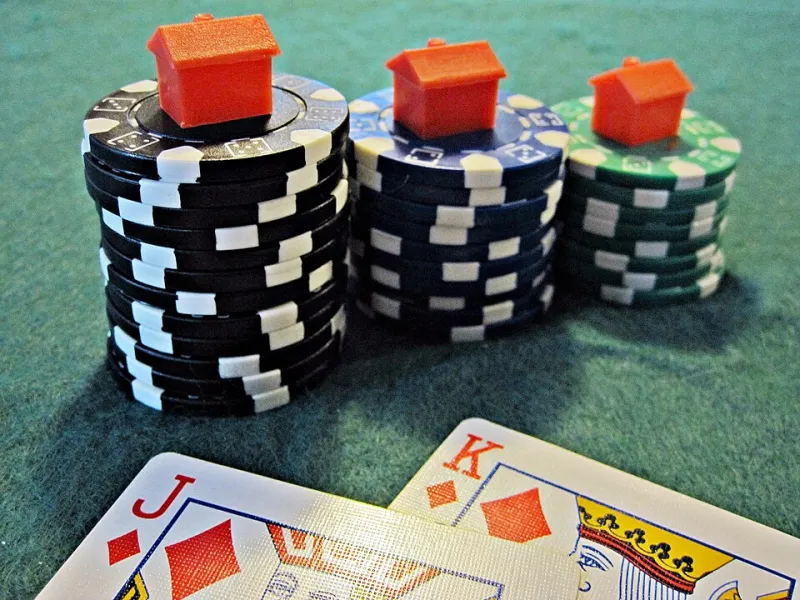
Photo: Images Money, CC BY 2.0, via Wikimedia Commons
Why Bankroll Management Is the First Strategy You Should Learn
Before you study the house edge on the Banker bet, before you evaluate a single betting system, and before you set foot on a casino floor, you need to answer one foundational question: how much money do you actually need to play baccarat intelligently?
Most players skip this question entirely. They pull a number out of thin air, buy in for whatever feels comfortable, and hope for the best. That approach is not a strategy—it is a gamble layered on top of a game that already favors the house. Disciplined players understand that bankroll management is not a constraint on their enjoyment; it is the framework that makes sustained, informed play possible.
This guide will walk you through the specific calculations and principles that separate players who manage their money from players who simply spend it.
Understanding the Three Bankroll Variables
Every bankroll decision is shaped by three interlocking factors:
- Your base bet size — the unit you wager on each hand
- Your session length — how many hands you intend to play
- Your risk tolerance — how much drawdown you can absorb without altering your behavior at the table
These variables are not independent. Adjusting one forces you to reconsider the others. A player who wants to sit at a table for two hours but only brings 20 units has already created a structural conflict: the session length demands more cushion than the bankroll provides.
The Unit-Based System: Your Bankroll's Foundation
Professional gamblers across disciplines think in units, not dollars. A unit is simply your standard bet—the amount you wager on a typical hand. Every other number in your bankroll plan is expressed as a multiple of that unit.
Here is the core formula:
Session Bankroll = Base Unit × Minimum Unit Reserve
For baccarat, a reasonable minimum unit reserve for a single session falls between 40 and 60 units. This range accounts for normal variance without exposing you to ruin on a single bad run.
Practical examples:
- $10 base unit → $400–$600 session bankroll
- $25 base unit → $1,000–$1,500 session bankroll
- $100 base unit → $4,000–$6,000 session bankroll
If your actual bankroll does not support these figures at your preferred bet size, you have two options: reduce your base unit or accept that your session will be shorter than planned. There is no third option that does not involve elevated risk.
Setting Loss Limits That You Will Actually Respect
A loss limit is only as useful as your commitment to honoring it. Many players set one in theory and abandon it the moment they fall behind. The key is to establish your limit before you sit down and treat it as a fixed constraint—not a guideline.
A widely used framework for baccarat is the 50/25 rule:
- Session loss limit: 50% of your session bankroll. If you lose half your buy-in, you leave the table. No exceptions.
- Single-streak loss threshold: 25% of your session bankroll. If you lose a quarter of your buy-in in rapid succession, you pause, reassess, and consider stepping away.
Why 50%? Because recovering from a 50% drawdown requires a 100% gain—something that is statistically unlikely in a short baccarat session with a house edge of roughly 1.06% on Banker bets. Chasing losses beyond this threshold almost always compounds the damage.
How Bankroll Size Changes Your Decision-Making
Here is something most players do not fully appreciate: the size of your bankroll relative to your bet directly affects the quality of your decisions at the table.
When your session bankroll is thin—say, 15 or 20 units—every losing hand carries psychological weight. You begin making reactive decisions: increasing bets to recover losses faster, abandoning your original plan, or staying at a table longer than you should. This is not a character flaw; it is a predictable response to financial pressure.
A properly sized bankroll insulates you from that pressure. When you are playing with 50 units and you lose five hands in a row, you have lost 10% of your session stake. That is a meaningful but manageable setback—one that does not require you to deviate from your strategy. The cushion is what preserves your judgment.
This is why the unit reserve recommendation is not arbitrary. It is calibrated to the natural variance of baccarat, where losing streaks of five to eight hands are statistically routine.
Scaling Your Bankroll for Different Playing Styles
Not all baccarat players are the same, and a one-size-fits-all bankroll formula misses important nuance.
Flat bettors (those who wager the same amount every hand) need the smallest reserves because their exposure is consistent and predictable. The 40-unit minimum is appropriate.
Progressive bettors (those using systems like Paroli or 1-3-2-6) experience wider variance because their bet sizes fluctuate. These players should target the upper end of the reserve range—60 units or more—to survive the inevitable cold stretches between profitable progressions.
High-frequency players who sit through 70–90 hands per hour at a live table face more total variance per session than those playing a slower game. For sessions exceeding 90 minutes, consider adding 10 units to your baseline reserve for every additional hour of intended play.
The Total Gambling Bankroll: Thinking Beyond a Single Session
Your session bankroll is a subset of your total gambling bankroll—the full amount you have allocated for casino play over a defined period, whether that is a Vegas trip, a month of play, or a calendar year.
A sound rule of thumb: no single session should risk more than 20–25% of your total gambling bankroll. This ensures that a bad session does not eliminate your ability to play again.
For example, if you have set aside $2,000 for a long weekend in Las Vegas, your per-session buy-in should not exceed $400–$500. This structure gives you four to five separate sessions, each of which is a fresh opportunity—not a desperate attempt to recover what was lost the night before.
A Final Word on Discipline as Strategy
The formulas in this guide are only useful if you apply them consistently. Bankroll management is not a one-time calculation you perform before your trip and then forget. It is a practice—a discipline you exercise every time you approach the table.
The players who last longest at baccarat are rarely the ones who got lucky on a single session. They are the ones who showed up prepared, bet within their means, left when their limits were reached, and returned another day with their bankroll intact. At Baccarat 168 Academy, we believe that kind of preparation is not just prudent—it is the foundation of every intelligent decision you will ever make at the table.