Under the Eye: How Casino Surveillance Identifies Skilled Baccarat Players — and What Legitimate Players Should Understand
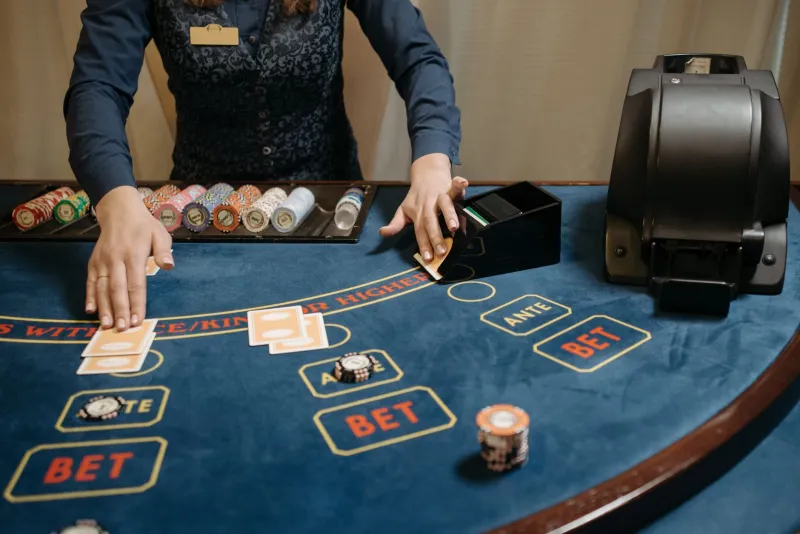
Most baccarat players walk into a casino thinking about their strategy, their bankroll, and perhaps the shoe they're about to encounter. Few consider that the casino is thinking about them. Not out of hostility — but because identifying players who demonstrate unusual consistency or disciplined behavior is a core function of modern casino management. Understanding this dynamic doesn't require paranoia. It requires awareness.
This article examines how pit bosses and surveillance teams evaluate baccarat players, what behavioral and financial patterns draw attention, and what the experience means for anyone committed to playing with genuine discipline.
The Pit Boss Is Not Just Watching for Cheaters
The popular image of casino surveillance involves catching card counters at blackjack or identifying sleight-of-hand at the poker table. That image is incomplete. Today's pit management is tasked with something broader: identifying any player whose long-term profitability might represent a threat to the house's expected return.
In baccarat specifically, this creates a nuanced challenge. The game has no true card-counting exploit. The house edge — roughly 1.06% on Banker and 1.24% on Player — is fixed by mathematics. Yet casinos still train their floor staff to flag certain baccarat players. Why?
Because consistency, discipline, and sharp bankroll management are themselves signals. A player who never chases losses, adjusts bet sizing with apparent method, and walks away at precise thresholds looks different from the average recreational gambler. That difference is noticed.
Betting Pattern Analysis: The Primary Tool
The most reliable instrument in a pit boss's toolkit is bet-pattern observation. Modern surveillance software — used by major casino operators across Las Vegas, Atlantic City, and regional gaming markets throughout the US — can track every wager placed at a table in real time, charting bet size against outcomes and flagging statistical anomalies.
What does an anomaly look like in baccarat? Consider these scenarios:
- A player who consistently increases bet size following Banker streaks and reduces exposure during choppy sequences.
- A player whose session results, tracked across multiple visits, deviate significantly from the expected variance curve.
- A player who arrives, plays a defined number of hands, and departs regardless of whether they are ahead or behind — suggesting pre-set session rules rather than emotional decision-making.
None of these behaviors are illegal. In fact, they are precisely what disciplined strategy recommends. But they are also precisely what surveillance is trained to notice.
Behavioral Red Flags That Draw Scrutiny
Beyond bet patterns, pit staff are trained to read behavior. Several habits — ironically, habits associated with educated, prepared players — can accelerate attention:
Minimal small talk. Recreational players tend to engage socially at the table. A player who maintains quiet focus, avoids side conversations, and shows no emotional response to outcomes may stand out in a room built on entertainment.
Scoreboard usage without superstition. Baccarat tables provide road maps — the Big Road, Bead Plate, and derived roads. Most players use these displays emotionally, looking for patterns to bet on. A player who references the scoreboard analytically, or who ignores it entirely in favor of a fixed system, signals a different level of engagement.
Precise departure timing. Leaving a session at a pre-determined loss limit or win target is sound bankroll management. It also looks deliberate to anyone watching. Surveillance teams note players who execute clean exits rather than playing until the table closes or their chips run out.
Consistent unit sizing. Recreational players frequently adjust bets impulsively. A player who maintains a consistent unit size, scaled proportionally to a session bankroll, demonstrates a level of financial discipline that registers as unusual.
How Surveillance Technology Has Evolved
The casino floor of 2024 is not the casino floor of 2004. Facial recognition software is deployed at major US properties, enabling operators to cross-reference players against internal databases of flagged individuals — including those previously backed off at other properties. RFID chips embedded in casino plaques allow electronic tracking of bet sizes without manual notation. Real-time analytics platforms aggregate player data across sessions, sometimes across visits spanning months.
For baccarat players, this means that a single session of disciplined play may generate a profile that persists. If that profile accumulates enough data points suggesting consistent, low-variance results, it will eventually reach a supervisor's desk.
It is worth emphasizing: the casino's response to a skilled, disciplined baccarat player is typically not removal. Because baccarat offers no genuine mathematical exploit, a player cannot gain a positive expected value through strategy alone. The house edge remains intact. Casinos know this. What they respond to is the combination of sharp behavior and significant dollar exposure — a high-roller playing with unusual discipline will attract more scrutiny than a low-stakes player using identical methods.
What "Staying Under the Radar" Actually Means for Legitimate Players
This phrase is often misused to imply deception. For legitimate baccarat players, it means something more straightforward: play naturally, without theatrical displays of discipline.
Here is what that looks like in practice:
- Engage with the environment. A player who occasionally acknowledges a dealer, reacts naturally to outcomes, and participates in the social rhythm of the table is less conspicuous than one who treats the session like a clinical exercise.
- Avoid dramatic bet-size swings without natural cover. Sharply increasing a bet immediately after a loss — or after a win — looks reactive, which is what casinos expect. Systematic escalation patterns are more visible than organic variation.
- Understand that comp acceptance is not a red flag. Accepting casino comps — meals, hotel stays, free play — is a normal part of the high-volume player relationship. Refusing comps conspicuously, or avoiding players' club enrollment entirely, can itself seem unusual.
- Recognize the limits of baccarat's exploitability. The most important thing a disciplined player can internalize is that baccarat, played legitimately, does not threaten the casino. Surveillance attention is real, but it rarely leads to consequences for players who are simply playing well within the rules.
The Takeaway for Serious Players
The relationship between casino management and skilled baccarat players is neither adversarial nor equal. The casino holds structural advantages that no amount of discipline fully erases. What surveillance is truly protecting is not the mathematical edge — which is already locked in — but the casino's interest in maintaining an environment where recreational spending is not disrupted by players whose behavior influences others at the table.
For players committed to educated, methodical baccarat, the lesson is not to hide. It is to understand the room you are playing in as completely as you understand the game itself. The pit boss has information you don't. Now, at least, you have a clearer picture of what that information looks like — and why awareness of it makes you a more complete player.
At Baccarat 168 Academy, we believe that mastering the table means mastering its context. The felt, the odds, and the environment are all part of the same game.