What Your Opponents Are Telling You Without Speaking: Behavioral Cues and Composure at the Baccarat Table
Most players arrive at the baccarat table focused entirely on the cards. They track scoreboards, monitor trends, and rehearse their betting systems. What they rarely do is look up. And that inattention costs them a genuine informational edge.
Baccarat is, at its core, a game of fixed probabilities. The math does not change based on who is sitting across from you. But the environment at a live table is shaped by the people in it—their confidence, their anxiety, their hesitation, and their composure. A player who learns to read behavioral cues accurately gains not a statistical advantage over the house, but a richer understanding of table dynamics that can sharpen decision-making and protect against impulsive choices.
This article is not about manipulation, deception, or anything approaching surveillance. It is about active, ethical observation—the same skill that separates attentive players from passive ones in every serious card game.
Why Baccarat Players Broadcast More Than They Realize
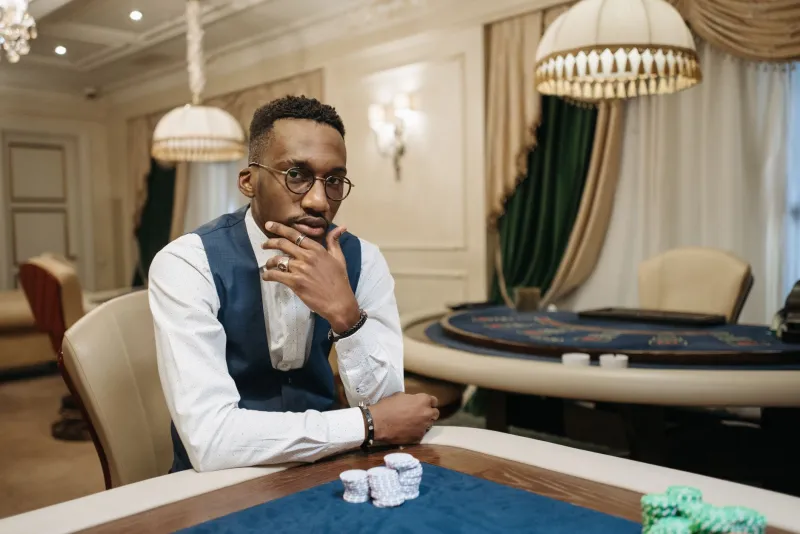
Unlike poker, where reading opponents is an explicit part of the game, baccarat players rarely consider that they are being observed at all. This creates an unusual environment: people are often unguarded. They react to their cards openly, bet without concealing their intent, and signal emotional states through body language that goes largely unnoticed at the table.
A player who has just made a large wager on Banker and then receives a poor initial reveal will often show a micro-expression—a fleeting tightening around the eyes, a brief compression of the lips—before composing themselves. These expressions, documented extensively in behavioral psychology research, last between one-fifteenth and one-twenty-fifth of a second. They are involuntary and, in most cases, honest.
The key for an attentive baccarat player is not to over-interpret what they see, but to build a baseline of normal behavior for each individual at the table before drawing any conclusions.
Establishing a Behavioral Baseline
Before you can identify meaningful deviation, you need to understand what a person looks like when they are neutral. Spend the first several hands at any new table simply watching. How does each player handle their chips when they are waiting? Do they stack and restack? Leave them untouched? Tap the felt? How do they hold their cards during a squeeze?
Chip behavior is particularly revealing. Players who are comfortable at a given stake level tend to handle their chips with minimal thought—placing bets efficiently, without ceremony. Players who are underbankrolled for the table, or who have recently absorbed significant losses, often betray their stress through repetitive, anxious chip handling: excessive sorting, over-stacking, or clutching their remaining stack as though protecting it.
Once you have observed a player through several neutral hands, deviations from that baseline become meaningful signals.
Betting Hesitation and What It Communicates
The moment immediately before a wager is placed is one of the most information-rich intervals at a live baccarat table. A player who pauses, shifts their gaze toward the scorecard, and then places a reduced bet has communicated something: their conviction is lower than usual. A player who moves their chips forward immediately, without reference to the board, is acting from a place of settled intention.
Hesitation does not always mean weakness. It can indicate a player recalculating their unit size after a run of losses, or simply reconsidering a side bet. Context matters. But when hesitation is paired with other behavioral signals—a slight backward lean, a brief downward glance, a hand that moves toward chips and then retreats—it tends to reflect genuine uncertainty.
In practical terms, this information is most useful for self-assessment. If you notice yourself hesitating repeatedly before placing a bet, that is your own behavior telling you something important. The hesitation may be communicating that your confidence in the strategy you are executing has eroded—a legitimate reason to pause, reassess, and potentially step away from the table.
Posture, Lean, and Physical Engagement
Body orientation provides a reliable window into a player's emotional state. Players who are engaged, confident, and enjoying a session typically lean slightly forward, maintain upright posture, and orient their torso toward the table. As sessions deteriorate—through losses, fatigue, or mounting pressure—this posture collapses. Shoulders round. Players lean back or to the side. The physical withdrawal mirrors the psychological one.
At American casino tables, where baccarat sessions can run for several hours in high-energy environments, fatigue-driven posture changes are common and worth monitoring in yourself as much as in others. A player who has shifted from engaged forward-lean to a slouched, backward position has often already lost their strategic footing, even if their chip stack has not yet caught up to that reality.
This is not a superstition. It is straightforward applied psychology: physical disengagement precedes emotional withdrawal, which precedes poor decision-making.
The Ethics of Observation at a Shared Table
It is worth addressing this directly. There is nothing improper about paying attention to the people around you at a casino table. Every experienced card player—in any game—develops the habit of active environmental awareness. You are not accessing private information. You are not interfering with another player's game. You are observing what is visible to anyone who chooses to look.
What crosses an ethical line is using observation to manipulate, intimidate, or exploit other players directly. Commenting on another player's visible anxiety to pressure them into changing a bet, or using behavioral reads to engage in side agreements with other players, moves outside legitimate play. The purpose of behavioral observation at the baccarat table should be to improve your own decision-making, not to exploit others' vulnerabilities.
Maintaining Your Own Composure
Perhaps the most practical application of behavioral awareness is turning it inward. If you understand what anxiety, hesitation, and fatigue look like in others, you become more capable of recognizing and managing those states in yourself.
The player who sits down at a baccarat table with a composed expression, steady chip handling, and deliberate betting pace is not performing—they are executing a discipline. Composure is not about concealing emotion for the benefit of others. It is about maintaining the internal stability that produces consistent, strategy-aligned decisions.
When you feel the urge to increase your bet dramatically after a loss, notice whether your body is already broadcasting that impulse: leaning forward, hand moving quickly toward your chips. That physical urgency is a warning signal. The disciplined player learns to pause at exactly that moment.
Bringing It All Together
Reading behavioral cues at the baccarat table is a skill that develops through deliberate practice. It requires patience during the baseline-building phase, accuracy in distinguishing genuine signals from noise, and the discipline to use what you observe to refine your own game rather than simply catalog the weaknesses of others.
The edge you gain is not a statistical one. The house edge on Banker remains 1.06% regardless of who is sitting at your table. What behavioral awareness provides is a clearer picture of the human environment around you—one that helps you identify table dynamics, manage your own emotional state, and make decisions that align with your strategy rather than the energy of the room.
At Baccarat 168 Academy, we return to a consistent principle: mastery at the baccarat table is built on knowledge, discipline, and attention. Behavioral observation is simply attention applied to its fullest, most legitimate extent.