One Player, One Table: How Solo Baccarat Reshapes Every Decision You Make
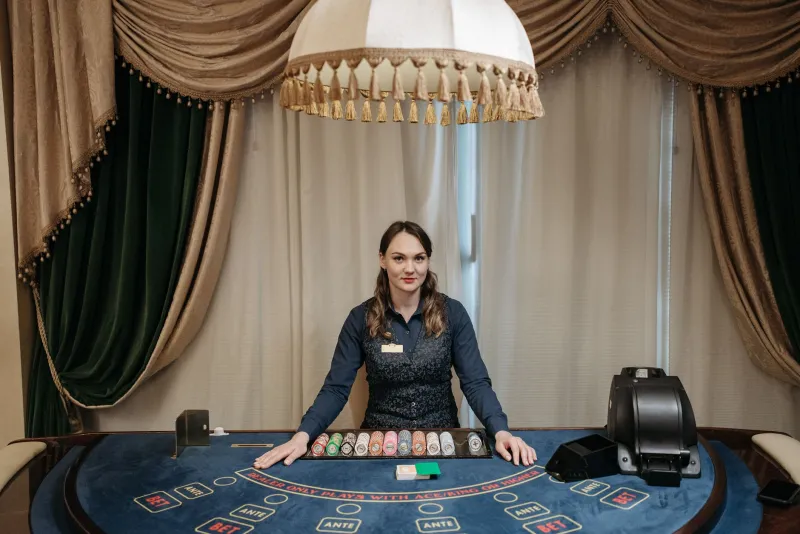
Walk into a busy American casino on a Friday night and the baccarat pits are rarely quiet. Chips clatter, scorecards fill up, and the collective energy of a crowded table creates a rhythm that carries players along almost involuntarily. Now imagine arriving on a Tuesday afternoon and finding a full-size table entirely to yourself. The dealer waits. The shoe is fresh. Every decision that follows belongs exclusively to you.
That scenario is more common than many players realize, and it is far more consequential than most appreciate. Solo baccarat is not simply a quieter version of the standard game. It is a structurally different experience that alters the pace of play, the rate of bankroll exposure, the psychological pressures you face, and the strategic adjustments that intelligent players should make in response.
The Pace Problem: When the Shoe Never Slows Down
At a full table, natural friction slows the game. Other players deliberate, place bets, occasionally ask questions, and the dealer manages multiple positions. A typical crowded table might produce forty to fifty hands per hour. Alone at the felt, that number can climb to one hundred twenty hands or more — some experienced dealers report even higher rates in head-to-head sessions.
That acceleration is the single most important variable a solo player must internalize. Every strategic metric you have studied — expected loss per hour, bankroll duration, session risk — is calculated against an assumed number of hands. When that number triples, your projected losses per hour triple alongside it. A session you budgeted to last two hours at a full table may exhaust your planned bankroll in forty minutes when you are playing alone.
The practical response is not to avoid solo play but to recalibrate your session bankroll upward or your betting unit downward before the first card is dealt. Arriving with the same chip stack you would carry to a crowded table, without adjusting your unit size, is one of the most common and costly errors solo players make.
Decision Fatigue Without the Buffer
At a populated table, there is a natural pause between your decisions. You watch other bets resolve. You observe the dealer's movements across multiple positions. That brief interval, even if only a few seconds, functions as a cognitive reset between choices.
Playing alone eliminates that buffer entirely. Decision follows decision without interruption, and the cumulative weight of continuous choosing is not trivial. Research in behavioral economics consistently demonstrates that decision quality degrades under sustained cognitive load — a phenomenon directly relevant to anyone making rapid, repeated wagering choices under pressure.
Disciplined solo players compensate by pre-committing to their betting selections before each hand begins. Rather than deliberating at the moment of placement, they arrive at the table with a defined framework — whether that is a flat-betting discipline, a structured progression, or a clearly bounded set of conditions under which they shift their wager. Pre-commitment reduces the cognitive burden of each individual decision and insulates the player from impulsive adjustments driven by short-term results.
The Psychological Weight of Isolation
Baccarat at a full table is, in part, a social experience. The shared reactions to a dramatic natural nine, the collective groan when the Banker pulls an unexpected third card — these moments distribute emotional weight across the group. When you are alone, every outcome lands entirely on you.
That isolation intensifies both winning and losing streaks in ways that can distort judgment. A run of consecutive losses feels more personal, more pointed, more like evidence of something wrong when there is no one else at the table to share the variance. Conversely, a winning streak can produce an inflated sense of control that leads solo players to increase their wagers beyond any rational justification.
Recognizing this dynamic in advance is essential. The cards at an empty table are governed by the same mathematics as those at a crowded one. The house edge on the Banker bet does not shift because you are the sole participant. What shifts is your perception of the results — and that perceptual distortion is where solo sessions are most frequently derailed.
The Genuine Advantages: Focus, Control, and Pace Management
Solo play is not purely a minefield. For a prepared, disciplined player, an empty table offers meaningful advantages that are difficult to replicate in a crowded environment.
First, there is focus. Without the noise, social pressure, and behavioral cues of other players, you can concentrate entirely on your own strategy. There is no one urging you to chase a streak, no table consensus pulling you toward a bet you had not planned to make, and no external emotional energy to manage. The absence of social friction is genuinely valuable for players who have done the work to develop a coherent strategic framework.
Second, and less obviously, solo play gives you a form of pace control you rarely have otherwise. At most tables, you cannot meaningfully slow the game. Alone, you can. There is no rule requiring you to place your bet the instant the dealer signals. Taking an extra moment to verify that your intended wager aligns with your session plan is entirely within your rights. That small deliberate pause — exercised consistently — can meaningfully reduce the hands-per-hour rate and, with it, your total exposure.
Third, solo sessions eliminate one of the more insidious pressures at busy tables: the implicit social expectation to keep betting. At a crowded table, sitting out a hand draws attention. Alone, you can pause, reassess, and re-engage entirely on your own terms.
Adjusting Your Session Plan for the Empty Table
A few concrete adjustments serve solo players well regardless of their broader strategic preferences.
Reduce your standard betting unit. If you typically wager one percent of your session bankroll per hand at a crowded table, consider dropping to one-half percent when playing alone. The increased pace means the same number of hands will pass in far less time, and your bankroll needs to be sized for the actual duration of the session, not the imagined one.
Set a hard hand count limit. Rather than measuring your session by time, count hands. Decide in advance that you will play no more than sixty or eighty hands regardless of results. At a solo table, that limit may be reached in under an hour, but it provides a meaningful structural constraint that time-based limits cannot.
Use the scorecard deliberately. The paper tracking sheets provided at baccarat tables are often dismissed as tools for superstitious pattern-hunters. For a solo player, they serve a different and legitimate purpose: they provide a brief, intentional pause between hands. Recording each result creates a small ritual that separates decisions from one another and partially restores the cognitive buffer that other players would otherwise provide.
Pre-commit entirely. Before you sit down, decide on your bet selection approach for the session. Whether you are flat-betting the Banker throughout, applying a conservative progression, or following a defined switching rule, commit to it before play begins. Mid-session strategy changes at a solo table, driven by recent results rather than reasoned analysis, are responsible for a disproportionate share of the worst outcomes solo players report.
The Empty Table as a Training Ground
For players serious about developing their baccarat discipline, solo sessions offer something a crowded table rarely can: an unobstructed view of your own decision-making. Every hesitation, every impulsive adjustment, every moment of doubt is visible to you without the social camouflage of a busy environment. That clarity is uncomfortable, but it is instructive.
The player who can maintain composure, adhere to a pre-defined plan, and manage pace effectively when playing alone has demonstrated a quality of discipline that transfers directly to any table in any casino. Mastering the solo session is, in many respects, the highest form of baccarat self-assessment available to the serious student of the game.
The felt is empty. The dealer is ready. The question is whether you are.