Reading the Record, Not the Future: What Baccarat's Scorecards Actually Show

Photo by Photo by Olivier Amyot on Unsplash on Unsplash
At many American baccarat tables, the scorecard is as much a part of the furniture as the shoe and the felt. Players mark results, study the big road, and debate whether the next hand belongs to Banker or Player. The displays are useful, but not in the way many players assume. They are record-keeping devices, not forecasting instruments. Understanding what each road records—and what it cannot—is a fundamental step toward disciplined play.
What the Displays Record
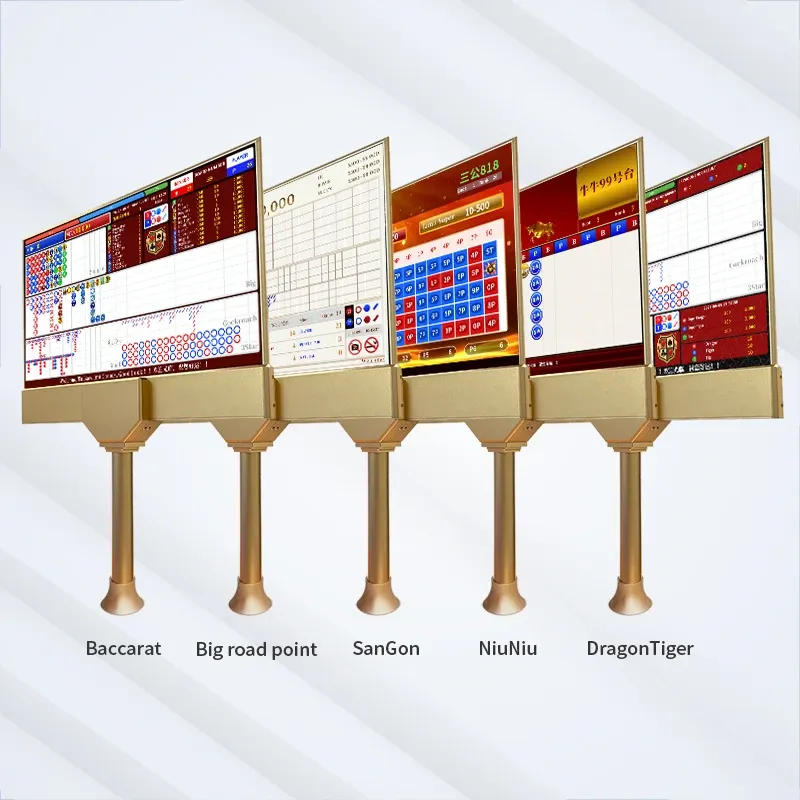
The bead plate is the simplest display. It records the outcome of each hand in sequence: Banker, Player, or Tie. That is all. It does not encode momentum, probability, or hidden information. The big road arranges those same outcomes into columns, with each column representing a streak of the same result. A new column begins when the result changes. Derivative roads—the big eye boy, small road, and cockroach road—are calculated from the big road's structure. They summarize whether recent columns have repeated, alternated, or followed certain patterns. None of these displays contains information about the next hand.
The Bead Plate and the Big Road
The bead plate is a chronological log. If the first hand is Banker, the first cell shows Banker. If the next three are Player, the next three cells show Player. The big road reorganizes the same data spatially. A run of four Banker hands becomes a vertical column of four marks. When Player wins, a new column starts. The big road makes streaks visually obvious, which is precisely why it invites overinterpretation. A long column looks like a force. In fact, it is a description of the past.
Derivative Roads and the Illusion of Depth
Derivative roads feel analytical because they have names and rules. The big eye boy, for example, compares columns to detect repetition. The small road and cockroach road apply similar logic with different offsets. These displays are transformations of past outcomes. They add visual complexity, not predictive power. A player who studies three derivative roads may feel better informed than a player who watches only the bead plate, but the additional information is entirely historical. The roads describe the shape of what has already happened.
Why Patterns Feel Predictive
Humans are pattern-seeking creatures. Random sequences contain clusters, streaks, and apparent symmetries. The displays make those clusters easy to see. A long Banker streak looks like momentum. A choppy road looks like a trend. In reality, each hand is an independent trial in the sense that the previous result does not dictate the next. Card composition effects exist, but they are small and not reliably exploitable in baccarat. The feeling of prediction is a cognitive artifact, not a mathematical edge.
A Simple Exercise: Record Versus Forecast
Before each hand, write down two things: the last five outcomes as recorded on the display, and your prediction for the next hand, if you feel one. After 50 hands, compare your prediction accuracy with the base rates. Most players find their forecasts are no better than chance. Then repeat the exercise using only the bead plate and no derivative roads. The point is to separate the act of recording from the act of forecasting. If the derivative roads genuinely helped, your accuracy should improve when you use them. In practice, it rarely does.
Using Displays as a Discipline Tool
Disciplined players use scorecards to track session length, bet size, and adherence to a plan. They might note how many hands they played, how often they deviated from their betting strategy, and whether fatigue set in. The display becomes a mirror, not a crystal ball. If you use a scorecard, keep a separate column for your own decisions. Mark when you increased a bet after a streak or reduced it after a loss. Over time, the record reveals your behavior more reliably than it reveals the shoe.
The Bottom Line
Scorecards and roads are honest records of what has happened. They are not forecasts of what will happen. Treat them as logbooks, and they can support discipline. Treat them as oracles, and they will support superstition. The choice is yours, and it is made hand by hand.