The $10 Table vs. the $100 Table: How Minimum Bets Secretly Decide Who You Are as a Player
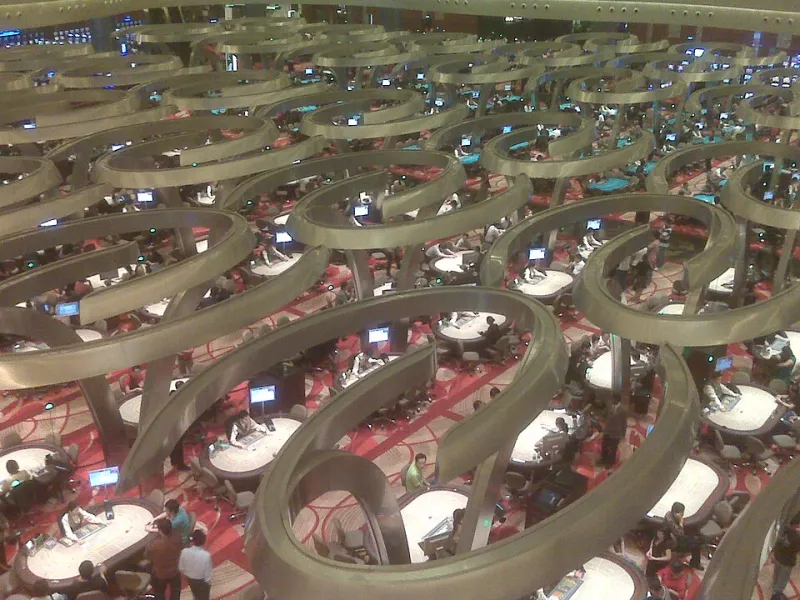
Photo: hj_west from USA., CC BY-SA 2.0, via Wikimedia Commons
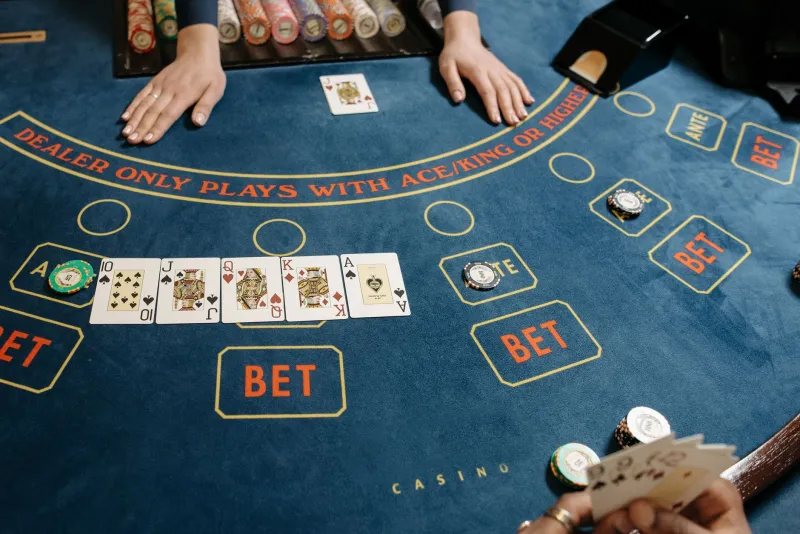
Walk into almost any American casino and you'll find baccarat tables separated by an invisible fence: the minimum bet. On one side, a $10 or $15 table humming with casual players. On the other, behind a rope or up a short staircase, a $100 minimum room where the lighting is warmer and the silence is heavier.
Most players treat that fence as a simple budget question. It isn't. The minimum you sit down at shapes how long your money lasts, how you feel about every hand, and — perhaps most dangerously — how you behave when variance arrives. Master the table starts with understanding the economics underneath it.
The Hidden Math of a Cheap Table
The counterintuitive truth about low-minimum tables is that they can be more expensive than they look — not because the house edge changes, but because the stakes creep.
At a $10 table with a $500 bankroll, you have 50 units of breathing room. Statistically, that's enough to survive the ordinary swings of a game where the house edge on the Banker bet sits around 1.06%. Losing streaks of eight or ten hands are painful but survivable.
The problem is behavioral. Low minimums invite over-betting. A player who would never risk 10% of their roll at a high-limit table will casually press to $50 or $75 at a $10 table because the numbers feel small. A bad twenty minutes can burn through a bankroll that was designed to last a weekend. The cheap table isn't cheap if you don't respect it.
The disciplined approach is to fix your unit size before you sit down — typically 1% to 2% of your session bankroll — and hold it constant regardless of how modest the table minimum is. The minimum is a floor, not a target.
The Intimidation Tax of High-Limit Rooms
The psychology inverts at the $100 table. Here, the danger isn't over-betting; it's under-considering. Players who step up often feel pressure to perform — to look like they belong — and that pressure produces two predictable errors.
First, shorter sessions. A $2,000 bankroll at a $100 minimum is only 20 units deep. Two unlucky runs and you're done, with no time for the natural variance of the game to even out.
Second, tilted decisions. Losing $500 in ten minutes feels very different from losing $50, even though it's the same proportion of many rolls. Players at high minimums are more likely to chase losses, double after wins to "make it count," or abandon a betting plan mid-session. The felt doesn't change. The player does.
If your bankroll can't comfortably support 30 to 40 units at the minimum, the high-limit room isn't a promotion. It's a trap with nicer chairs.
Where American Players Find the Friendliest Minimums
Not all US markets price baccarat the same way, and knowing where the player-friendly tables live is a legitimate strategic advantage.
- Las Vegas Strip: Strip casinos typically run $25 minimums on the main floor, climbing higher on weekends. The best values are often just off the Strip — locals casinos in the Las Vegas Valley have historically offered $10 and even $5 baccarat, particularly midweek.
- Downtown Las Vegas: Fremont Street properties frequently post $10 minimums, making it one of the most affordable places to learn the game in a live casino setting.
- Atlantic City: Boardwalk casinos commonly open at $15 to $25, with some midweek $10 tables. The market's competition for players works in your favor.
- Regional and tribal casinos: Across the Midwest, South, and Pacific Northwest, minimums of $10 to $15 are common, and some rooms offer mini-baccarat at $5 during off-peak hours. These are arguably the best learning environments in the country.
Timing matters as much as geography. Minimums rise with demand — Friday and Saturday nights, holidays, and during major events. A Tuesday afternoon session at the same casino might cost half the minimum of a Saturday evening one.
Matching Stakes to Skill Stage
Think of minimum selection as a three-stage ladder.
Stage one — the learner. If you're still confirming the rules, the drawing conventions, and your own composure, play the lowest minimum available, ideally $10 or less. Your goal is repetition, not profit. Volume of hands at low cost is how competence gets built.
Stage two — the practitioner. Once you've settled on a betting approach and can sit through a losing streak without deviating, step up to a minimum where your standard unit is meaningful but your roll still carries 30+ units. For most players, that means a $15 to $25 table with a $1,000 to $1,500 session bankroll.
Stage three — the professional-minded player. Only when your discipline survives a bad month does the high-limit room make sense. At that stage, the higher minimum is simply a tool for efficiency — more action per hour at a stake you can genuinely absorb.
Skipping stages is the costliest move in baccarat. The game will always deal the same cards; the only variable is whether you can afford to keep playing while variance plays out. Choose the table that lets you stay in the game long enough to play well.