Five Expensive Baccarat Myths American Players Keep Believing — And the Plain Truth Behind Each One
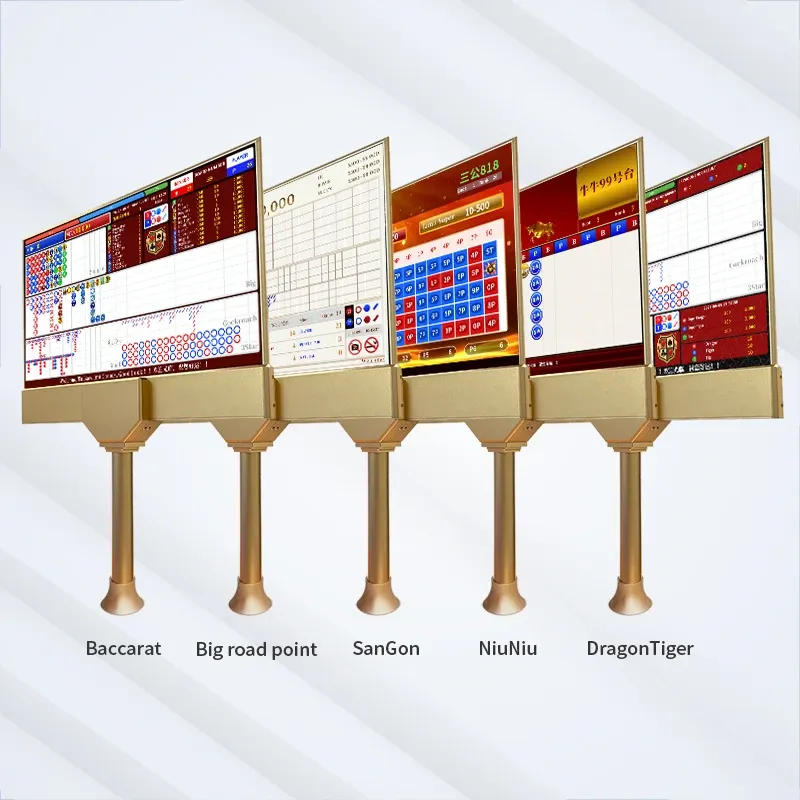
Photo: baccarat scoreboard roadmap pattern casino table close up, via www.macaumr.com
Baccarat generates more revenue for American casinos than almost any other table game, and a remarkable share of that revenue is built on what players believe rather than what is true. Myths thrive in baccarat because the game's presentation — the private salons, the Asian high-limit heritage, the elaborate scoreboards — invites superstition. Below are five of the costliest misconceptions, each paired with the mundane reality that should replace it.
Myth 1: Baccarat Is a Game for High Rollers Only
The image of baccarat as the province of tuxedoed whales is decades out of date. The version most Americans encounter, mini-baccarat, runs at $10 to $25 minimums in most US markets, with downtown Las Vegas and regional casinos frequently dipping to $10 or less during off-peak hours. In terms of accessibility, baccarat often undercuts blackjack, where 3:2 payouts have vanished from many low-limit tables.
The truth has financial consequences. Because the house edge on the best baccarat bets is lower than on nearly any other table game, the casual player is arguably better served at a $15 baccarat table than at a $15 blackjack table paying 6:5. The mystique isn't just wrong; it's steering people toward worse games.
Myth 2: The Roadmap Patterns Predict What Comes Next
Every baccarat table in America displays electronic roadmaps — grids of red and blue circles tracking whether Player or Banker has won. Many players study these charts with the intensity of a stock analyst, hunting for "dragon tails" and chop patterns, betting accordingly.
The plain reality: each hand is an independent event dealt from a shuffled shoe. Past results have no influence on future ones, and no arrangement of circles changes the underlying probabilities. This isn't a matter of opinion; it's a structural feature of the game. The roadmaps are entertainment — and, from the casino's perspective, some of the most effective marketing ever installed on a wall, because they convince players that a predictable pattern is forming precisely when nothing of the sort exists.
Myth 3: The 5% Commission Makes Banker Bets a Rip-Off
A common argument around American baccarat tables: the casino taxes your Banker wins at 5%, so the bet must be a bad deal — a hidden rig. The math says the opposite. The Banker hand wins slightly more often than it loses because of when it draws its third card, and even after the commission, the house edge on Banker is roughly 1.06%, compared to about 1.24% on Player and more than 14% on Tie.
In other words, the commission is the price of the best bet available in the room. Refusing it on principle means accepting worse odds on Player or catastrophically worse odds on Tie. The commission isn't a scam; it's the receipt for the cheapest seat in the casino.
Myth 4: Betting Systems Can Overcome the House Edge
Martingale, Fibonacci, Paroli — American players keep resurrecting progression systems that were old when the casinos on the Boardwalk were new. The appeal is intuitive: double after a loss, and one win erases everything.
The flaw is structural. Table limits cap how long you can double, bankrolls cap it sooner, and the house edge applies to every bet regardless of its size. A progression system doesn't eliminate the edge; it simply concentrates your risk into a small number of catastrophic losing streaks. Long-term, the expected loss of any betting sequence equals the house edge multiplied by your total money wagered — and progressions increase total money wagered. The boring truth is that flat betting on Banker, at a unit size your bankroll can sustain, outperforms every clever system ever devised.
Myth 5: Card Counting or Shoe Watching Gives You an Edge
Borrowed from blackjack folklore, the belief that sharp eyes can beat baccarat persists in US card rooms. The reality is unforgiving: baccarat is played from a shoe with both hands' outcomes determined by fixed drawing rules, and the depth to which cards are dealt before shuffling destroys any meaningful count. Even the most sophisticated advantage techniques in baccarat yield edges measured in fractions of a percent — far below the house edge itself.
What disciplined players actually do instead is unglamorous: they take the lowest house edge bet, manage their bankroll in fixed units, quit on a schedule, and treat variance as the price of entertainment rather than an enemy to be conquered.
What the Truth Buys You
Strip away the five myths and what remains is a game of remarkable clarity: one genuinely good bet, one acceptable alternative, one bet to avoid forever, and no pattern, system, or superstition that changes any of it. That clarity is a genuine advantage. Most of the money casinos win at baccarat comes from players who believe otherwise — and the player who simply bets Banker in modest, consistent units is, hand for hand, playing smarter than nearly everyone around the table.